
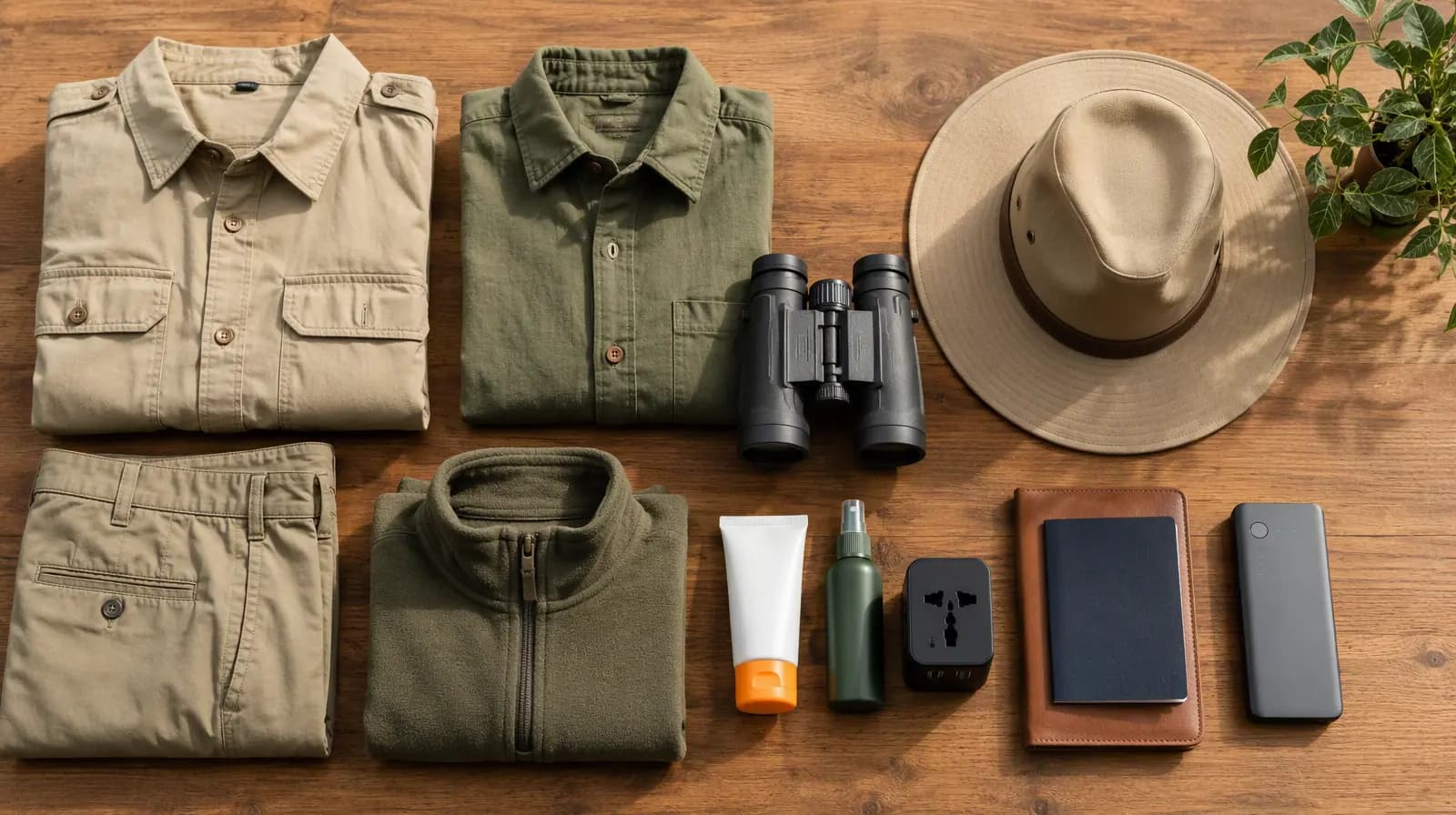
What Color Clothing Should You Wear on an Indian Safari?
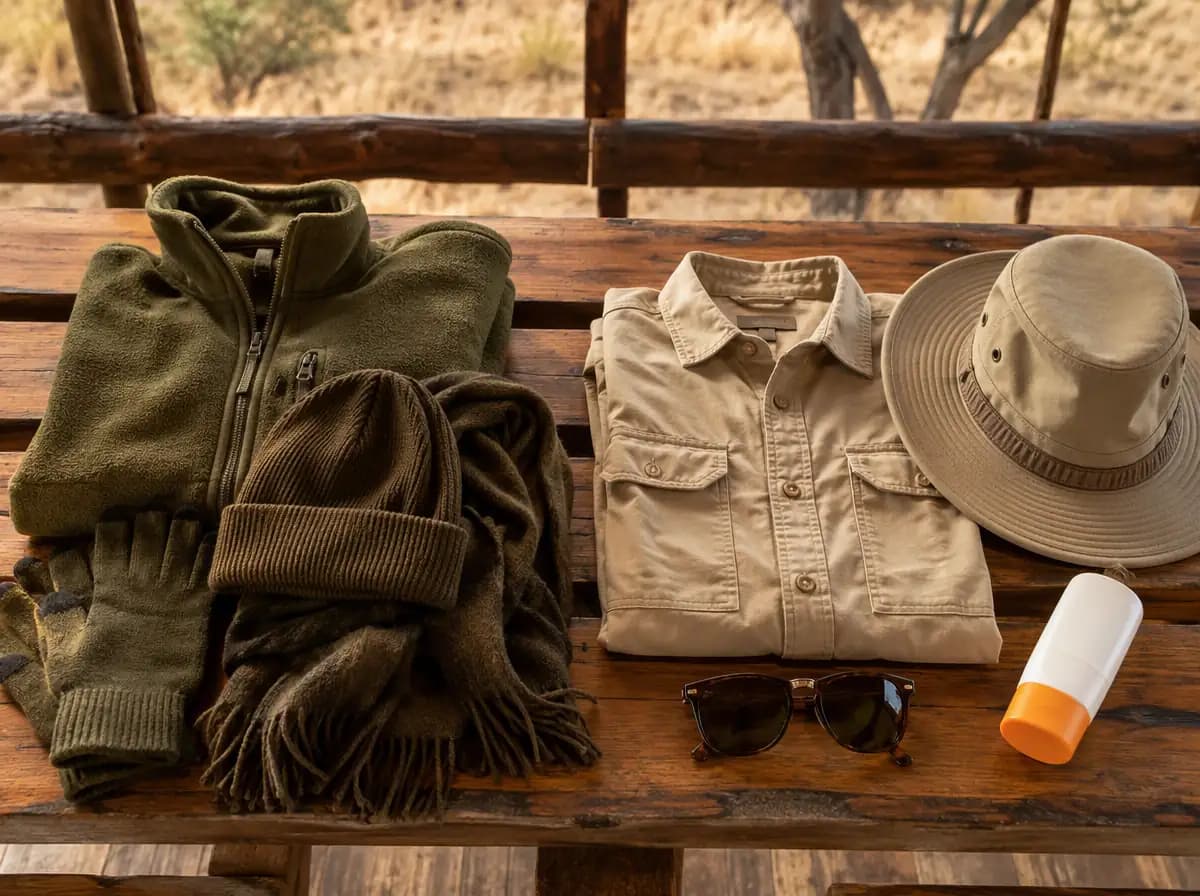
Choose khaki, olive, beige, stone and soft brown. These muted earth tones sit comfortably within India’s dry deciduous and green forest landscapes, show less dust and avoid the high contrast of fluorescent colours or brilliant white.
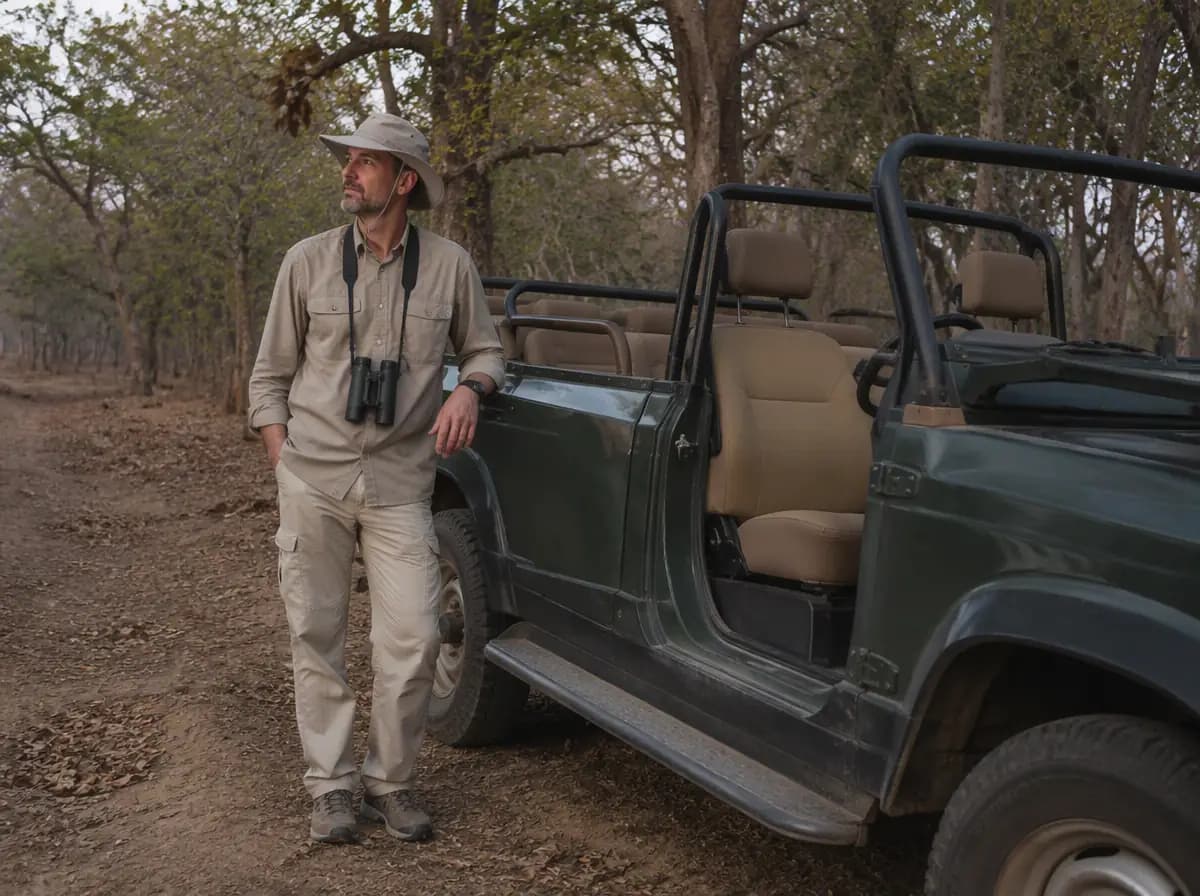
The practical answer to what to wear on a tiger safari is a breathable long-sleeved shirt, comfortable long trousers and layers you can remove as the day warms. Long sleeves and trousers provide useful sun, insect and scratch protection without requiring heavy fabric. In thornier forest or on lodge nature walks, a durable but lightweight weave is more useful than a delicate holiday shirt.
Avoid bright colours for game drives where possible. Pure white stands out and quickly becomes dusty; solid black can feel uncomfortably hot and is more conspicuous against pale grass. That said, clothing colour is not a magic wildlife formula. Movement, noise, sudden standing and ignoring your naturalist are far more likely to spoil a sighting. You do not need camouflage or a brand-new “safari uniform”.
This India safari clothing guide also differs slightly from open-savanna packing advice. Indian forests often mean dappled shade, tangled edges and closer vegetation, so quiet fabrics and practical coverage matter. Save floaty scarves, dangling straps and noisy jackets for elsewhere.
The Complete Packing Checklist
Use this India safari packing list as the safari-specific core of your suitcase. Adjust quantities for laundry access and trip length, and keep essential medication and documents in your hand luggage.
Binoculars deserve a place near the top of the list. They reveal birds, deer and behaviour that a phone screen misses, and each guest having their own pair avoids constant passing around at a sighting. A small dry or dust bag keeps optics and electronics more comfortable on open-vehicle drives.
Travelling with children, camera equipment or a health consideration? A generic checklist may need adjusting.
Plan a private safari with trip-specific guidance
| Category | Items | Notes |
|---|---|---|
| Clothing | 2–3 neutral long-sleeved shirts; lightweight trousers; breathable base layers; fleece or light jacket; warm hat, gloves and scarf for winter; sleepwear; lodge-casual outfit | Prioritise layers over bulky outfits. Add a light waterproof layer if your dates or region call for it. Closed trainers or lightweight walking shoes cover most trips. |
| Health & sun protection | Broad-spectrum sunscreen; lip balm; sunglasses; wide-brimmed hat; insect repellent; personal medication; small first-aid kit; hand sanitiser; oral rehydration salts | Follow product labels and your clinician’s advice. Keep medicines in original packaging with prescriptions where relevant. Repellent is useful even when mornings feel cool. |
| Gear & accessories | Binoculars; small daypack; soft reusable bag; camera and spare memory cards if used; power bank; dry or dust bag; compact torch; reusable water bottle | A small pack holds shed layers, water and optics. Dust protection is useful. Follow airline rules for batteries and power banks, including cabin-baggage requirements. |
| Documents & electronics | Passport and visa confirmation; insurance details; flight and lodge information; payment cards; phone and chargers; Type D-compatible adapter; offline copies | Keep digital copies securely available offline and a separate paper set for key details. Check plug shape and device voltage rather than assuming every socket is the same. |
Do I Need a Plug Adapter for India?
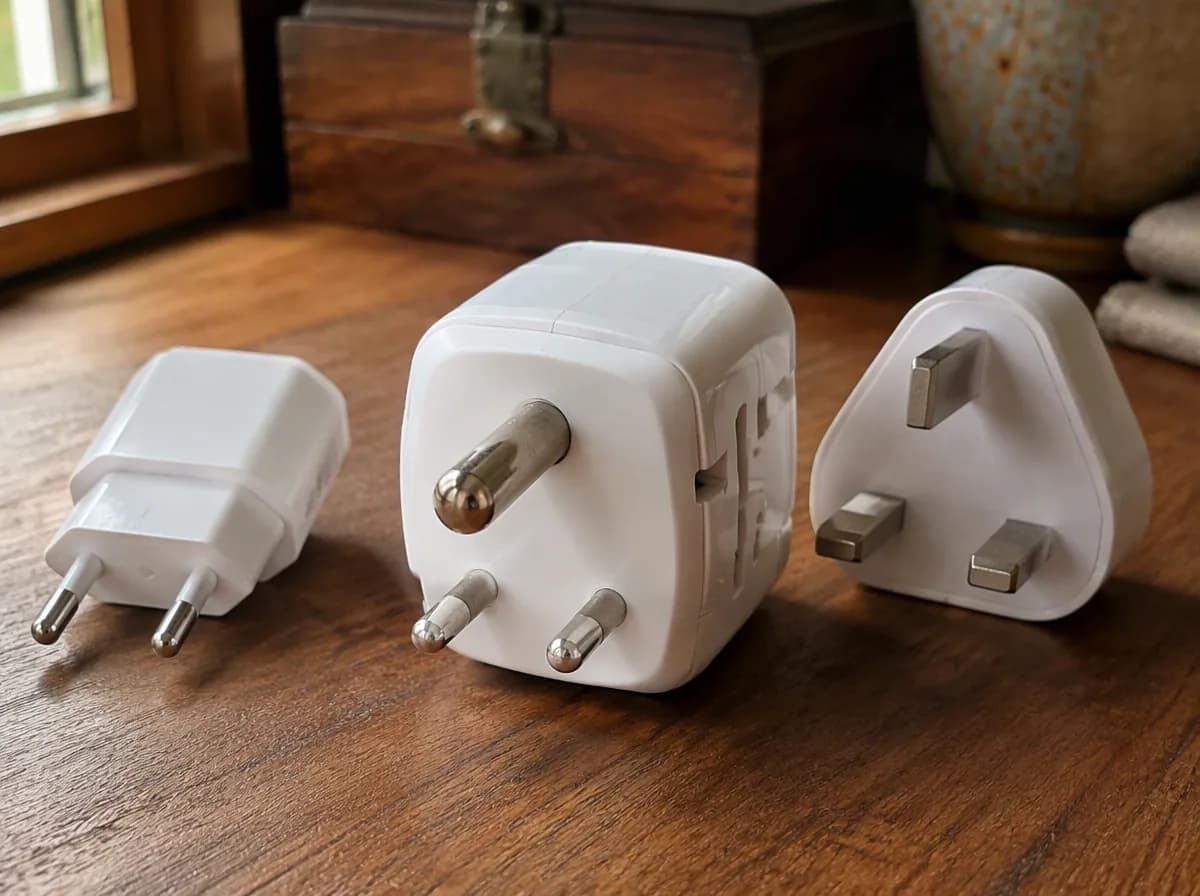
Usually yes, but most European travellers do not need a voltage converter. India uses Type C, D and M plugs at 230V and 50Hz. That voltage is close to the UK, Ireland and mainland Europe’s usual 220–240V standards.
UK and Irish Type G plugs need an adapter. A continental European Type C plug may fit some sockets, but do not rely on that for every lodge; grounded Type E or F plugs also need the right connection. Choose a good-quality adapter that explicitly supports Indian Type D outlets. Type M uses larger pins and is more often associated with higher-powered appliances.
Check the small print on each charger. If it says “Input: 100–240V, 50/60Hz”, it is designed for India’s voltage with only a plug adapter. This covers many phone, tablet, laptop and camera chargers. An adapter changes the shape of the connection, not the electricity.
Single-voltage equipment needs more caution. Never connect a device marked only for 120V to a 230V socket. High-powered items such as hairdryers also require an adapter or converter with an appropriate rating, so confirm what your lodge provides before packing one. A compact power bank is useful for long transfers, subject to your airline’s battery rules.
Packing Differently by Season
Winter and post-monsoon: add removable warmth
Northern and central Indian winter drives can start near 2–5°C and warm towards 20°C later in the day, although conditions vary. A moving open jeep adds wind chill. Pack a fleece or insulated layer, warm hat, gloves and scarf, then store them in your daypack as the temperature rises. Green post-monsoon trips may call for a light rain layer.
Late spring and summer: prioritise heat management
From March onwards, use breathable long sleeves, a wide-brimmed hat, sunglasses and high-SPF broad-spectrum sunscreen. Pack enough light shirts to change between drives. Do not let the promise of strong sightings tempt you into buying heavy dark clothing or leaving out sun protection.
For the comfort-versus-sightings trade-off and regional timing, read our season-by-season guide to the best time for an India tiger safari. Your final list should follow the parks and dates you have actually booked, not a national average.
What Not to Bother Bringing
- Heavy hiking boots for a vehicle-only safari. Broken-in closed trainers or light walking shoes are usually sufficient. Add boots only for a genuinely walking-heavy itinerary.
- A full camouflage wardrobe. A few muted, comfortable pieces are enough. Laundry at lodges can reduce the number of outfits you need; confirm availability first.
- Excessive camera equipment. If photography is not your main purpose, one familiar camera or a good phone may be enough. Our India safari photography gear guide covers lenses and specialist kit separately.
- Multiple bulky jackets. One adaptable warm layer plus a light outer layer takes less space and handles temperature swings more effectively.
- Every electrical gadget you own. Bring the chargers you will use, one suitable adapter and a power bank. Check domestic flight baggage limits before adding more.
Frequently Asked Questions
Can I wear bright colours on a safari in India?
Bright colours are not usually forbidden, but muted khaki, olive, beige and soft brown are more practical and less conspicuous in the forest. Pure white shows dust and dark black can feel hot. Clothing colour does not guarantee a sighting; quiet behaviour, limited movement and your guide’s instructions matter more.
Do I need a voltage converter for India?
Most European travellers do not. India’s 230V, 50Hz supply is close to European standards, and chargers marked 100–240V, 50/60Hz need only a suitable plug adapter. Check every device label. A single-voltage appliance that does not support 230V needs specialist advice and may be better left at home.
What shoes are best for a safari in India?
Comfortable closed trainers or lightweight walking shoes are best for most vehicle-based safaris. They protect feet from dust, steps and uneven lodge paths without the weight of hiking boots. Choose a pair you have already worn in. Add heavier footwear only if your itinerary includes substantial walking or trekking.
Can I wear jeans on a tiger safari?
Yes, if they are comfortable for several hours in a jeep and are not bright white or heavily distressed. Lightweight travel trousers are usually cooler, dry faster and offer easier movement. In hot weather, breathable long trousers also provide more useful sun and insect protection than heavy denim.
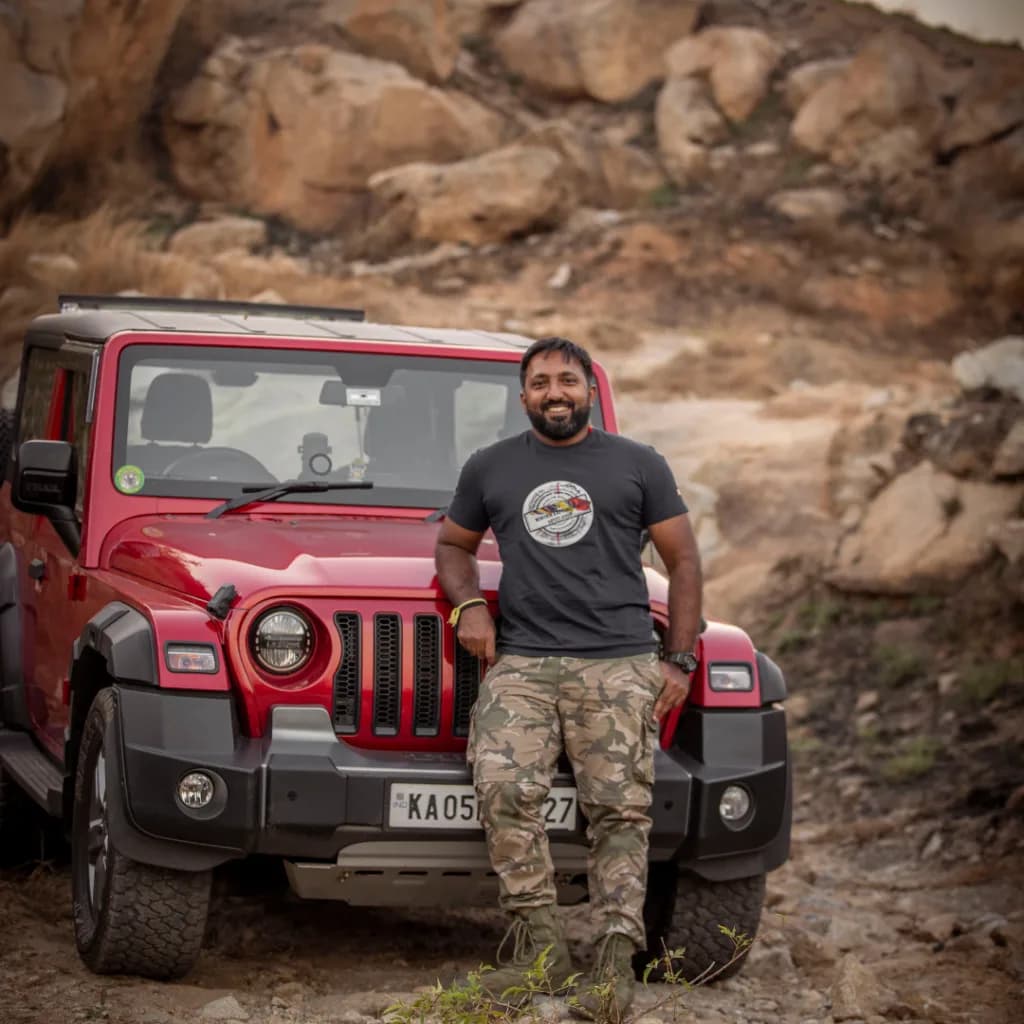
Surya Veloor Sundar
Partner & Lead Naturalist at Tentasy, wildlife photographer and naturalist with 12+ years of field experience across South Indian forests.
Meet the Tentasy team
Get a packing list built around your actual trip
We send every guest a tailored packing list for their specific trip and season. Tell us your dates, route and who is travelling, and we will help you prepare without overpacking.